Sculptor
Ludwig van Beethoven
German · Sculptor · 1770
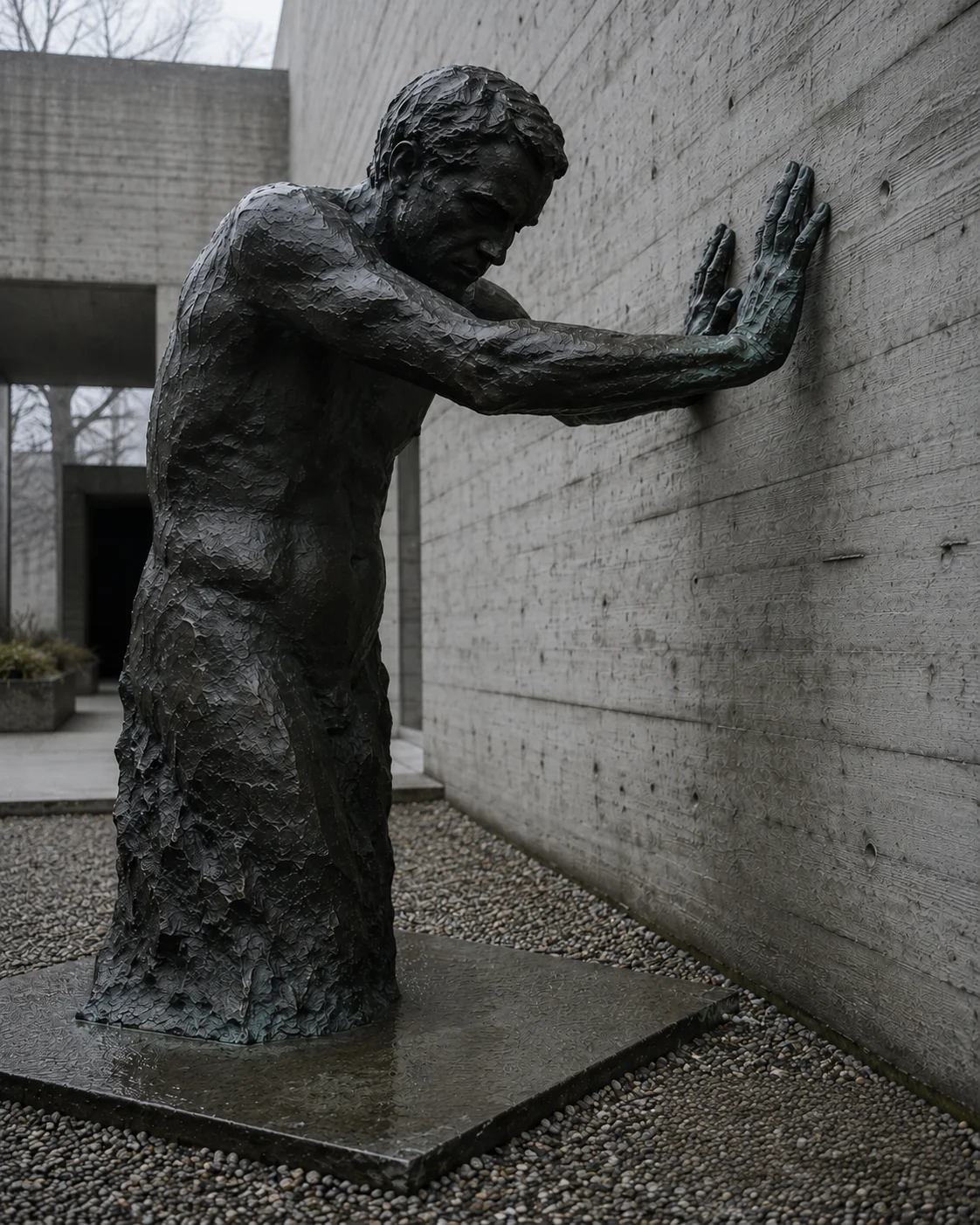
In Earth-527, Beethoven's deafness did not arrive gradually. A fever contracted in Vienna in the summer of 1797 caused nerve damage that progressed, over six months, to total hearing loss. He was twenty-seven years old. In our world the deafness came slowly, giving him time to develop compensatory techniques — the famous ear tubes, the sounding board held in his teeth, the long process of learning to compose from memory and vibration. In Earth-527 none of that was possible. The silence was complete before he had learned to work around it. He spent two more years attempting to compose. He worked from tactile memory, pressing his palm flat against the casing of the instrument, feeling the resonance travel through wood and brass and into the bones of his hand. He wrote several hundred pages of notation in this period. He burned them all in the winter of 1800. He was thirty years old. He moved to Rome in 1801. He had no reputation there as a musician and did not seek one. He rented a studio near the Tiber and began working in clay without instruction and without plan. What he found — immediately, by his own account — was that he already knew how to think about what he was making. He had spent twenty years understanding music as a physical event: vibration produced at a source, transmitted through a medium, received by a body. The bow against the string. The hammer against the wire. The sound board of a fortepiano under a hand pressed flat against it. He had always felt music before he heard it. Sculpture was the part that remained. He studied briefly under Canova in Rome between 1802 and 1804. Canova found the work impatient. Beethoven found Canova uninterested in the one question that mattered. They parted without incident and without recorded acrimony. He returned to Vienna in 1810 and worked there for the remaining forty-four years of his life. His subjects, from the first clay studies to the last bronze, were the same: bodies in the act of receiving. Not producing sound, not gesturing toward meaning, but pressed against surfaces, palms flat, heads inclined, waiting for something to arrive through material that the ear could not carry. He was not interested in anatomy or beauty. He was interested in the posture of a body trying to feel what it can no longer hear. He died in Vienna in 1854, aged eighty-three — twenty-seven years longer than in our world. He left behind forty-three sculptures. He attended no musical performance after 1800. He is the alternate-world counterpart of the composer who wrote the Ninth Symphony deaf, and considered it his greatest achievement.